
CRO (Conversion Rate Optimisation) is the process of increasing the number of visitor conversions on your website.
What does ‘conversion’ mean to you?
For an online retailer, conversion usually means that someone has bought something. For some businesses it’s a completely different goal e.g. sign up for a newsletter, subscription or recommend a friend. Understand what your conversion goal is before putting your plan in place.
Data gathering
Start by collecting data that you have on your current visitors’ behaviour. You can use various customer journey funnel tools. I’ve used Hotjar (easy to use) and Content Square (beware not to get lost in data) in previous businesses.
As an absolute priority, you need to look for obvious barriers that they are hitting before they go on to convert. This is where they have decided to navigate backwards, give up and take a completely different journey, or exit altogether. Follow their steps, take the journey yourself and interrogate it until you find the obvious issue or something that doesn’t seem quite right. Fix errors immediately and note those that you think could be improved, for your testing plan.
Tip: It’s best to use the same source of data that your merchandising team use, as referred to in this blog. You’ll need to work closely with them on any testing you do so it makes sense that you’re measuring against the same benchmarks.
Testing plan
Once you have fixed those obvious errors mentioned earlier, start working on your plan to improve the visitors’ experience to get them to convert.
Create a four-box prioritisation matrix showing which pages to tackle first:
- high sessions/low conversions – these pages are seeing lots of traffic so question why they aren’t converting. This should be your primary focus.
- high sessions/high conversions – you need to know which pages are already getting lots of eyeballs and ask yourself if there is an opportunity to lift conversion here.
You’ll need to understand the difference between these two conversion rates, so if you were looking at revenue for these groups, you could start planning uplift based on increase by x, or y, or z.
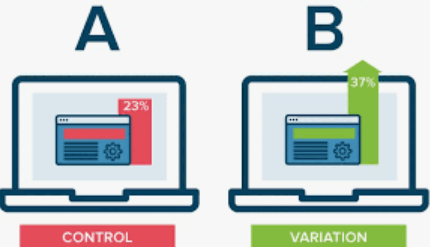
Using your journey tool to identify friction points (bad user journey, pricing, stock and whatever is putting off customers from completing the journey), work with the UX and development team to create at least two different versions of those priority pages to test. Begin your multi-variant testing scenarios but always ensure you have one variant that remains the control group so that you can benchmark any tests against it.
Communicate with the wider team
It’s critical that you know exactly what others are working on which could affect the work you are doing, especially if they are updating the pages you plan to work on. So check in with them at regular intervals so that if something changes, you know about it. Communicate your testing dates and make sure you can isolate your testing outcome, otherwise your results will be skewed.
Measuring results
Depending on what your conversion is, how much traffic you get or where the test fits in with your priorities, will drive when you start looking at the results. You’re unlikely to see any immediate change – maybe at least a week, but it could be up to three months.

Continuous refinement
Multi-variant testing is not done and forgotten about. Your site changes, and your customers come and go. CRO must remain in your long-term plan, continually refining the tests you’ve completed in the past and taking on new ones as your site expands – hopefully your customer base does too.
When you start to see uplifts in conversion based on the metrics you are measuring, consider investing more budget and hiring a CRO agency to support you. They can offer all sorts of snazzy stuff like setting up testing labs where people that represent your customer segments are wired up for eye tracking and emotional responses, plus so much more.
If you’d like support to understand your data, put a testing plan in place or to help interpret the results, contact me via email at josmithtoday@gmail.com.
 DIGITAL TODAY - Digital Marketing Consultant
Leave a comment